Foot And Mouth Disease
Foot-and-mouth disease is one of the world’s most economically the feet, and animals become reluctant to eat or move. important viral diseases of livestock. The virus infects cattle, pigs, sheep, goats, and many cloven-hoofed wildlife species. The infection results in vesicular lesions in and around the mouth and on the feet, and animals become reluctant to eat or move.
Cause
Foot-and-Mouth Disease (FMD) is caused by a virus called Aphthovirus, which belongs to the Picornaviridae family (a group of small RNA viruses).
There are 7 main types (called serotypes) of the virus:
- O
- A
- C (likely extinct in nature)
- Asia 1
- SAT 1
- SAT 2
- SAT 3
SAT = Southern African Territories
Early Symptoms
- Sudden high fever (104–106°F / 40–41°C)
- Loss of appetite
- Dullness and weakness
- Drop in milk production
Main Clinical Signs (Vesicle Formation)
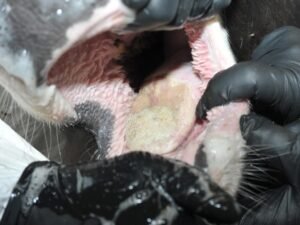
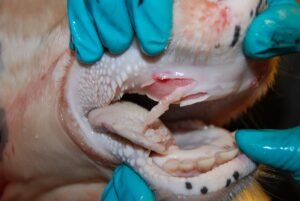
Clinical signs of foot-and-mouth disease in cattle include fever of approximately 40°C (104°F), followed by vesicular lesions appearing on the tongue, hard palate, dental pad, lips, gums, muzzle, coronary band, interdigital cleft, and teats in lactating animals. Acutely affected individuals can salivate profusely and make characteristic smacking noises, stamp their feet, and prefer to lie down. Ruptured oral vesicles can coalesce and form erosions but heal rapidly less than two weeks after vesicle formation.See images above of clinical signs in cows
Mouth
- Tongue, lips, gums
- Excessive salivation (drooling)
- Difficulty eating
Feet
Vesicles on the feet of animals with FMD take longer to heal and are susceptible to secondary bacterial infection leading to chronic lameness or, in severe cases, death. Lesions can involve one or more feet.
- Between hooves and around the coronet
- Pain → lameness
- Animals reluctant to walk or stand
Udder & Teats
- Blisters on teats
- Pain during milking
- Mastitis may develop
These animals are most commonly affected:
Cattle & Buffalo
- Severe salivation
- Clear vesicles in mouth and feet
- Sharp drop in milk yield
Sheep & Goats
- Mild signs
- Often only lameness
- Lesions may be small and missed
Pigs
- Severe lameness (most prominent sign)
- Hoof damage (may even slough off)
- Less obvious mouth lesions
Diagnosis of Foot-and-Mouth Disease
Real-time RT-PCR assay, virus isolation, ELISA, or lateral flow devices for antigen detection
ELISA or virus neutralization tests for antibody detection
FMD virus is transmitted via various routes:
- direct contact with infected animals
- indirect contact with secretions or excretions (including semen and milk) from infected animals
- mechanical vectors (people, horses, dogs and cats, rodents, birds, vehicles, and equipment)
- air movement over land and water
The virus can enter the host via inhalation, ingestion, or skin wounds and mucous membranes. Breeding is a possible route of transmission for the SAT viruses in African buffalo populations.
Other Diseases That Can Be Confused with FMD
- Malignant Catarrhal Fever (Eye discharge, mouth lesions, fever)
- Mucosal Disease (Mouth ulcers, diarrhea)
- Bluetongue (Swollen tongue, lameness)
- Epizootic Hemorrhagic Disease (Fever, hemorrhage, oral lesions)
- Contagious Ecthyma (Orf) (Scabby lesions on lips and mouth (not true blisters)
Prevention of Foot-and-Mouth Disease (FMD)
1. Vaccination (Most Important)
- Vaccinate all cattle, buffalo, sheep, goats and Use multivalent vaccines (covering serotypes like O, A, Asia 1)
2. Movement Control
- Stop movement of animals during outbreaks.Avoid buying animals from unknown markets and Quarantine new animals for 10–14 days
3. Farm Biosecurity
Use disinfectants like:
- Sodium carbonate (washing soda)
- Citric acid
- Iodine-based disinfectants
4. Isolation of Sick Animals
- Immediately separate infected/suspected animals
- Use a separate worker if possible
- Do not mix milk, feed, or equipment
Treatment of Foot-and-Mouth Disease (FMD) in Animals
There is no specific antiviral cure for FMD. Treatment is supportive, aiming to reduce pain, prevent secondary infections, and help the animal recover faster.