Blackleg in Animals (Black Quarter)
Blackleg (also called Black Quarter) is a very serious and rapidly fatal bacterial disease of cattle and sheep. It is caused by the bacterium Clostridium chauvoei, which is responsible for Blackleg disease.
The disease mainly affects young, healthy, fast-growing cattle, especially beef breeds between 6 and 24 months of age. In sheep, the infection usually occurs through wounds caused by shearing, docking, or castration.
What Causes Blackleg?
The bacteria produce spores that can survive in soil for many years. Animals become infected when they swallow these spores while grazing.
After entering the body:
1. The spores pass through the intestines.
2. They enter the bloodstream.
3. They settle in muscles and remain dormant.
4. Injury, bruising, or heavy exercise activates the spores.
5. The bacteria multiply and produce toxins.
6. Severe muscle damage and gas formation occur.
Animals Commonly Affected
- Cattle (especially beef cattle)
- Sheep
- Occasionally goats
Risk Factors
- Age between 6 and 24 months
- Rapid growth and good body condition
- Grazing on contaminated pasture
- Recent flooding or soil excavation
- Bruising or muscle injury
- Warm seasons (summer and autumn)
Clinical Signs (Symptoms)
Blackleg usually appears suddenly, and many animals are found dead without warning.
Early Signs
- High fever
- Depression
- Loss of appetite
- Lameness (usually hind legs)
Characteristic Signs
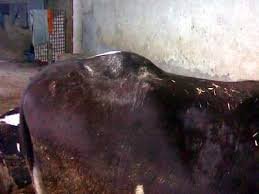
- Swelling in large muscles (hip, shoulder, neck, chest, back)
- Hot and painful swelling at first
- Crackling sound (crepitation) when touched due to gas under the skin
- Swelling becomes cold and painless later
- Tremors and weakness
- Difficulty breathing in some cases
Death
Animals usually die within **12–48 hours** after signs appear.
Postmortem Findings
Affected muscles are:
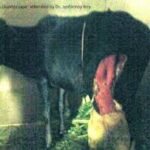
- Dark red to black in color
- Dry and spongy
- Filled with gas bubbles
- Sweet-smelling
Diagnosis
Blackleg is suspected when a healthy young animal dies suddenly and has swollen muscles with crepitation.
Veterinarians confirm the diagnosis by:
- Laboratory culture under anaerobic conditions
- PCR testing
- Fluorescent antibody testing
- Immunohistochemistry
- Ultrasonography of affected muscles
Differential Diagnosis
Other bacteria that can cause similar lesions include:
- Clostridium septicum*
- Clostridium novyi*
- Clostridium sordellii*
- Clostridium perfringens*
Treatment
Because the disease progresses very quickly, treatment is often unsuccessful.
Early treatment may include:
- Penicillin injections (10,000 IU/kg intramuscularly)
- Supportive therapy
- Isolation of affected animals
Prevention and Control
Vaccination is the most effective method of prevention.
Vaccination Schedule
- Calves should receive the first vaccine at 2 months of age
- Second dose 4 weeks later
- Annual booster before the high-risk season (spring or early summer)
During an Outbreak
- Vaccinate all susceptible animals immediately
- Treat exposed animals with penicillin
- Move animals to clean pasture
- Burn or deeply bury carcasses
Sheep Vaccination
- Two initial doses
- Second dose one month before lambing
- Annual boosters thereafter
Key Points
- Blackleg is one of the most deadly clostridial diseases.
- It mainly affects healthy young cattle.
- Sudden death is common.
- Swollen muscles with gas are characteristic.
- Vaccination provides excellent protection.
Summary
Blackleg is an acute and highly fatal bacterial disease caused by Clostridium chauvoei. It primarily affects young, fast-growing cattle and causes severe muscle destruction, gas formation, and sudden death. Because treatment is rarely successful, routine vaccination and proper carcass disposal are essential for disease control.
Note
Here is a more professional and polished version of your paragraph:
This content has been developed after reviewing and studying the clinical work and research of Dr. Henry R. Stämpfli, DMV, Dr. Med. Vet., DACVIM-LAIM, Department of Clinical Studies, Ontario Veterinary College, University of Guelph, and Dr. Olimpo J. Oliver-Espinosa, DVM, MSc, DVSc, National University of Colombia, as published on MSD Veterinary Manual (msdvetmanual.com). As a veterinary professional, I have carefully analyzed their documented findings and incorporated evidence-based information into this material for educational and informational purposes.