Anthrax in Animals
(Splenic Fever, Siberian Ulcer, Charbon, Milzbrand)
Introduction
Anthrax is a serious zoonotic disease caused by the bacterium
Anthrax and the bacteria
Bacillus anthracis.
It mainly affects herbivorous animals such as:
- Cattle
- Sheep
- Goats
- Camels
- Horses
- Wild herbivores
Humans can also become infected through contact with infected animals, meat, hides, or contaminated products.
Cause of Anthrax
Anthrax is caused by a large gram-positive spore-forming bacterium called Bacillus anthracis.
The bacteria form spores that can survive in soil for many years. Grazing animals become infected when they eat contaminated grass, feed, or water.
Transmission of Anthrax
Animals become infected through:
- Eating contaminated soil or grass
- Contaminated feed or hay
- Inhalation of spores
- Wounds in the skin
- Biting flies (mechanical transmission)
Humans may become infected by:
- Handling infected carcasses
- Eating raw or undercooked infected meat
- Contact with hides, wool, or bones of infected animals
Pathogenesis (How Disease Develops)
After entering the body, spores:
1. Enter macrophage cells
2. Germinate into active bacteria
3. Multiply rapidly
4. Produce toxins
These toxins cause:
- Severe swelling (edema)
- Tissue damage
- Septicemia
- Organ failure
- Sudden death
Epidemiology
Anthrax is common in areas with:
- Neutral or alkaline soil
- Dry and hot climates
- Flooding or drought history
Outbreaks are often seen after:
- Heavy rain
- Floods
- Soil disturbance
- Drought conditions
Spores may remain alive in soil for decades.
Incubation Period
Usually:
- 3–7 days
Range: - 1–14 days
Clinical Signs in Animals
In Cattle, Sheep, and Goats
Common signs include:
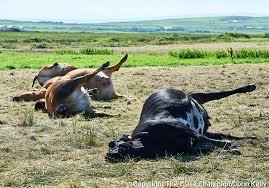
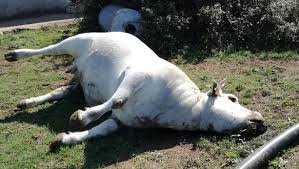
- Sudden death
- High fever
- Difficulty breathing
- Trembling
- Staggering
- Convulsions
- Collapse
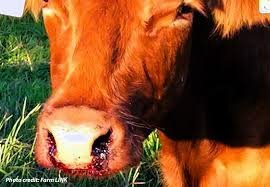
- Bloody discharge from nose, mouth, or anus
- Rapid bloating after death
- Reduced milk production
- Abortion in pregnant animals
Many animals are found dead without showing signs.
In Horses
Signs include:
- Fever
- Severe colic
- Depression
- Bloody diarrhea
- Swelling of neck and abdomen
- Weakness
Death usually occurs within 2–3 days.
In Pigs
Pigs are more resistant but may show:
- Swelling of throat
- Difficulty breathing
- Sudden death
- Chronic mild illness
- Enlarged lymph nodes
In Dogs and Cats
Signs may include:
- Swelling of throat
- Fever
- Weakness
- Septicemia
Postmortem Findings
Typical lesions include:
- Dark unclotted blood from body openings
- Absence of rigor mortis
- Rapid decomposition
- Enlarged black spleen
- Hemorrhages in organs
- Edema under skin
- Enlarged lymph nodes
Necropsy should be avoided because exposure to air forms more spores.
Diagnosis
Diagnosis is based on:
- Clinical signs
- History of sudden death
- Laboratory testing
Common laboratory tests:
- Microscopy
- PCR
- Bacterial culture
- ELISA
- Blood smear staining
Differential Diagnosis
Anthrax should be differentiated from:
- Clostridial diseases
- Bloat
- Lightning strike
- Leptospirosis
- Anaplasmosis
- Poisoning
- African swine fever
- Classical swine fever
Treatment
Early treatment is important.
Effective antibiotics include:
- Penicillin
- Oxytetracycline
- Amoxicillin
- Ciprofloxacin
- Doxycycline
- Streptomycin
- Sulfonamides
Treatment is most successful in early stages.
Prevention and Control
Vaccination
Vaccination is the best prevention method.
The commonly used vaccine is:
Sterne strain live vaccine
Important points:
- Vaccinate animals yearly in endemic areas
- Vaccinate 2–4 weeks before outbreak season
- Do not give antibiotics within 1 week of vaccination
Disposal
Proper disposal is very important.
Methods include:
- Burning (best method)
- Deep burial
Do not open carcasses.
Control Measures
Important control measures include:
- Quarantine infected farms
- Isolate sick animals
- Remove healthy animals from contaminated areas
- Disinfect barns and equipment
- Control flies and scavengers
- Remove contaminated feed
- Maintain hygiene for handlers
Human Anthrax
Humans usually become infected after contact with infected animals or contaminated products.
Forms of human anthrax:
1. Cutaneous anthrax
2. Gastrointestinal anthrax
3. Inhalational anthrax
4. Injection anthrax
Inhalational anthrax is the most dangerous form.
Bioterrorism Importance
World Health Organization and
Centers for Disease Control and Prevention consider Bacillus anthracis an important biological threat because spores can be used as biological weapons.
Key Points
- Anthrax is caused by Bacillus anthracis.
- Spores survive in soil for many years.
- Herbivores are most commonly affected.
- Sudden death with bleeding from body openings is common.
- Necropsy should be avoided.
- Early antibiotic treatment can save animals.
- Vaccination is the best prevention method.
- Proper carcass disposal is essential.
- Anthrax is a zoonotic disease and can infect humans.
Reference
This article has been prepared after detailed study and review of the research, clinical observations, and veterinary expertise of Domenico Galante and Antonio Fasanella published on MSD Veterinary Manual. As a veterinary doctor, I have carefully reviewed their scientific work and expert findings to provide authentic and reliable information about anthrax in animals